
If you ever wondered how to communicate with a deaf dog, the answer is simple: Sign language
Talking with Hands: A Quick Guide to Sign Language for Deaf Dogs
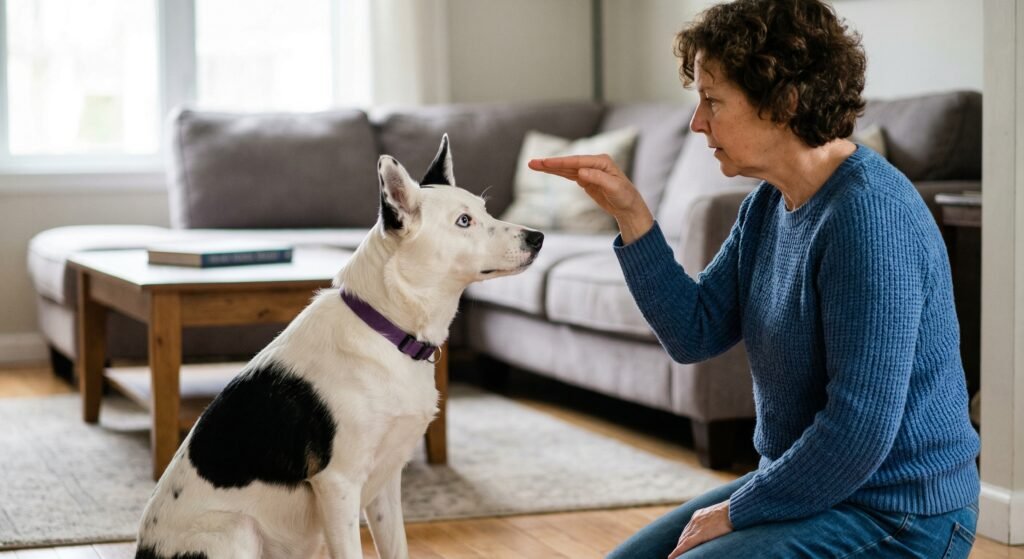
Communicating with a deaf dog isn’t a barrier—it’s an opportunity to build a deeper, visual bond. Since dogs are naturally experts at reading body language, “speaking” with your hands is often more intuitive for them than vocal commands.
Why Signs Work
Deaf dogs don’t get distracted by tone of voice or “noise.” Hand signals provide clear, consistent, and unambiguous cues that tap into their natural instinct to watch your movement.
5 Essential Signs to Start
- Good (The Reward): A thumbs-up or a quick open-hand flash. This tells them, “You got it! Treat incoming.”
- Sit: A flat palm moving down or a closed fist.
- Stay: A flat palm facing the dog (like a stop sign).
- Come: A wide, welcoming sweep of the arm toward your chest.
Pro-Tips for Success
- Get Attention First: Use a gentle touch on the shoulder, a foot stomp (for vibrations), or a flick of a flashlight to get them to look at you.
- Be Big and Clear: Use distinct motions so they don’t confuse “Sit” with “Lay Down.”
- High-Value Rewards: Use “jackpot” treats (chicken, cheese) to make the visual connection stick faster.
- Consistency is King: Ensure everyone in the household uses the exact same hand shapes.
Teaching a deaf dog is a quiet, focused, and incredibly rewarding process. You aren’t just training; you’re developing a private language with your best friend.