Here at Pawsitive Spots, we talk a lot about adventure. Usually, that means finding the best dog-friendly brewery in Kingston, hiking to a stunning view in the Hudson Highlands, or checking out a new pet boutique in Saratoga. But sometimes, the greatest adventure your dog can have is only six inches from their nose.
Welcome to the world of the “Sniff Walk.”
You’ve probably experienced this: you’re on a tight schedule, trying to get your morning loop in before work, and your dog decides to dedicate five full minutes to analyzing a single blade of grass. You gently tug, say “Let’s go,” and feel a bubble of frustration.
We get it. But today, Frank.Endog and the rest of the Pawsitive Spots team want to ask you to do something revolutionary: Stop pulling. Start letting them sniff.
Changing your daily walk from a structured march to a leisurely, dog-led “sniffari” isn’t just an indulgence; it is one of the easiest, most effective ways to dramatically improve your dog’s mental, physical, and behavioral health.
The Stunning Science of the Sniffer
To understand why sniffing is so vital, we have to appreciate that dogs don’t just see the world; they smell it.
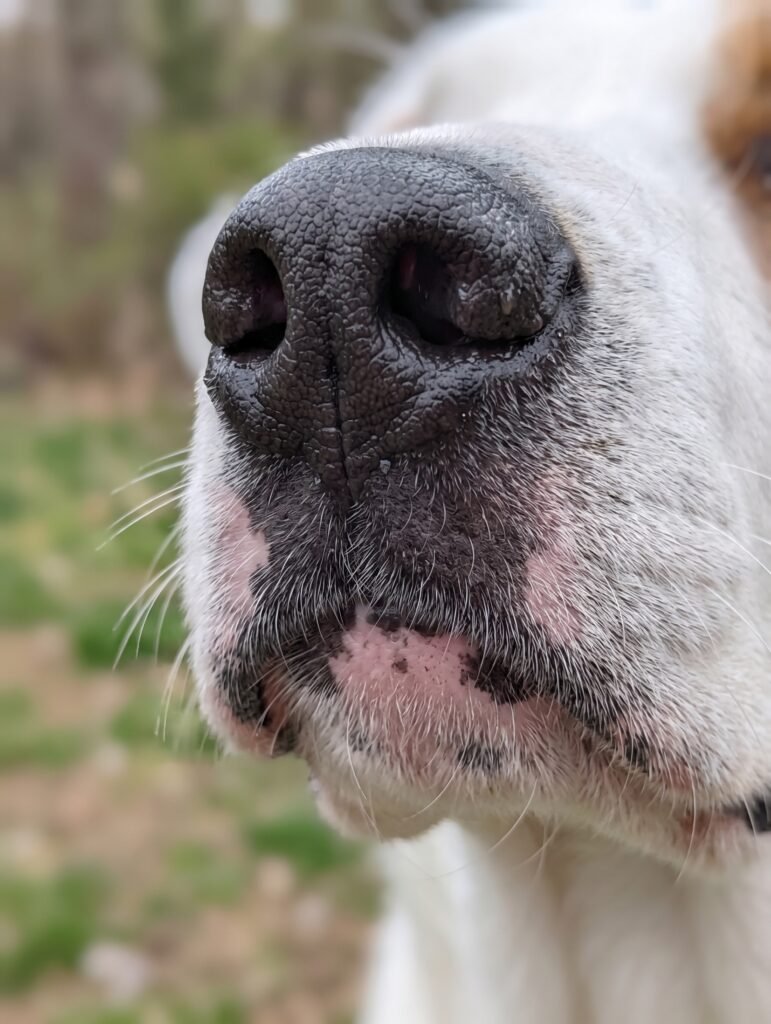
While humans rely primarily on vision, a dog’s sense of smell is estimated to be between 10,000 and 100,000 times more sensitive than ours. If we view a beautiful sunset, our dogs are inhaling the aromatic equivalent of a 3D IMAX movie.
- Olfactory Architecture: Dogs have up to 300 million olfactory receptors in their noses, compared to our paltry six million. The part of their brain dedicated to analyzing these smells is, proportionally, 40 times larger than ours.
- The Second Brain: They also possess a specialized organ called the Jacobson’s organ (or vomeronasal organ) located inside the nasal cavity. This organ detects pheromones, allowing them to read the chemical “news” of the neighborhood—knowing which dog passed by, how long ago, their health status, and even their mood.
When you prevent your dog from sniffing, you are effectively asking them to walk through a vibrant museum with their eyes closed.
Mental & Physical Benefits: Tiring out the Brain
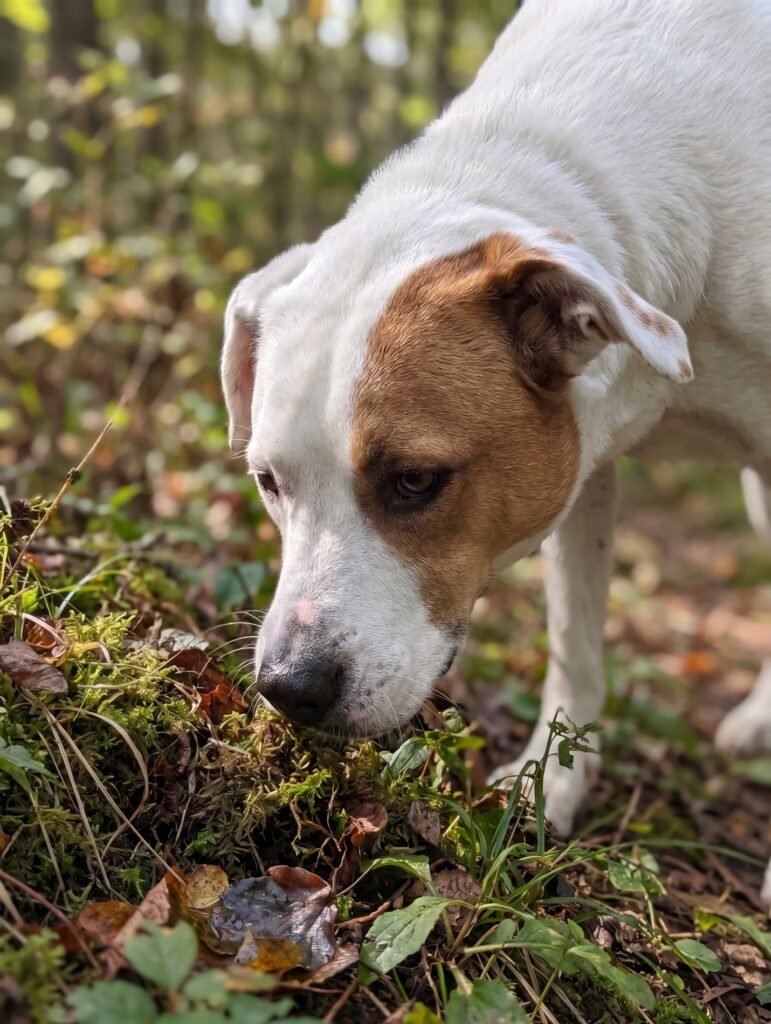
A 20-minute walk where your dog is allowed to stop and sniff whenever they please can actually be more tiring for them than a 20-minute fast-paced jog where they aren’t allowed to stop.
1. Intense Mental Stimulation
Processing olfactory information is incredibly taxing on a dog’s brain. They are analyzing complex scent puzzles: “Who was here? What did they eat? Where did they go?” This mental workout satisfies their instinctual need to seek and learn, reducing boredom. A mentally satisfied dog is a calm dog at home.
2. Physical Decompression
Fast walks often keep dogs in a state of high arousal. They are scanning for triggers, pulling on the leash, and focused on moving forward. A sniff walk encourages slower movement, allowing their heart rate to decrease and their body to loosen up. It’s a physical decompression session after being inside all day.
Fixing Behavioral Problems Through Freedom
This is where sniff walks become truly “pawsitive.” Allowing your dog freedom of choice and expression can be a game-changer for common behavioral issues.
Many behavioral problems—excessive barking, destructive chewing at home, or lunging on the leash—stem from frustration, anxiety, and pent-up energy.
- Reducing Leash Frustration: Structured walks are all about human control. Your dog has no say in where they go, how fast they move, or what they look at. This lack of control can cause significant frustration. Letting them lead the sniff walk gives them a sense of agency.
- Fixing Anxiety: If a dog is anxious about their environment, being forced to march past scary things without understanding them can worsen the fear. Letting them sniff trees, bushes, and pavement allows them to gather data about their surroundings. Information reduces uncertainty, and uncertainty is the root of anxiety.
- Optimism vs. Pessimism: A landmark 2019 study published in Applied Animal Behaviour Science found that dogs that are given more choice and allowed to engage in natural behaviors, like sniffing, are happier and more optimistic in general. They viewed ambiguous situations more positively because they had more control over their lives.
How to Do a Sniff Walk in the Hudson Valley
You don’t need a fancy trail to start. A sniff walk can happen around your block, but the Hudson Valley offers some spectacular spots for “sniffaris.”
- Get the Right Gear: Use a fixed-length leash and a well adjusted harness or comfortable collar. You want to give them space, not control them tightly.
- Declare it a “Dog-Led” Walk: Tell yourself before you start: “This walk belongs to my dog.”
- Let Them Lead: If they want to go left, go left. If they want to spend three minutes on one fire hydrant, let them. The goal is not distance; the goal is processing.
- Try the Long Line (Responsibly): For truly epic sniff walks, head to a quiet Hudson Valley spot like the carriage roads at Olana State Historic Site, the open fields of Clermont, or a quiet trail in Harriman State Park. Use a long line (15-30 feet) in open, safe areas to give them the feeling of free exploration while maintaining safety.
Start Your Adventure Today
This week, we challenge you to replace two of your “structured” walks with two pure sniff walks. Let your neighbor see you standing still for ten minutes while your dog investigates a leaf pile. Smile knowing that you’re not “wasting time,” you’re providing your best friend with a essential, science-backed form of therapy and joy.
Happy sniffing, Hudson Valley!
Follow Frank.Endog on Instagram [@Frank.Endog] for more of his Hudson Valley sniffari adventures!